Planting and Transplanting

Planting Seeds

Here’s what you’ll need:

  • Packets of seeds (I prefer to cut the corner of mine, and have them all upright in a tupperware)
  • Pencil
  • Garden plan
  • Watering can

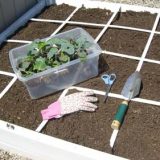
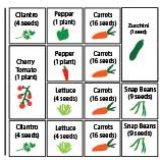
Before you even walk out the door, make sure your garden plan shows where each variety will be planted, and how many plants go in each square foot.  Now, head out to your garden with your hands full and your hopes high! Work methodically so you don’t lose track of where you are. Pick a square. Use your pencil to poke the right number of holes (16 plants per square = 4×4, 9 plants per square = 3×3, 4 plants per square = 2×2). Then put 2-3 seeds in each hole. Gently cover them up and water.

A note about planting the right number of seeds–if the seeds are small, you just need to pinch a few between your thumb and forefinger, drop them in, and call it good. I can never get just 3 carrot seeds. That’s okay, since you will thin (cut off the tops) of all but one plant per hole. Also, be expecially careful about watering small seeds–they will wash right away.

In his book, Mel suggests pre-soaking the seeds, and even pre-sprouting them. I simply don’t have the patience for this. I plant directly in my garden, give it a good watering, and they turn out just fine!

Transplanting Plants

It is really important that you don’t just plop your newly-purchased or indoor-started plants into the garden. If they’ve been started indoors, they have never dealt with the intensity of direct sunlight. In fact, you’ll notice the leaves grown inside and later grown outside look different–the plant makes the leaves flatter and bigger indoors (to absorb more light) and then smaller and curlier outdoors. If you move them straight outside, they will get “sunburned” and die. Also, the stems are not used to the rigors of wind. Hopefully you have put a fan on them and touched them so they get strong to some resistance. Still, outdoors is a whole new world.

If you’ve purchased plants, they are likely to do better, but would still benefit from some adjusting. Here’s how:

One week before you want to plant outdoors, start taking your plants out to “visit.” Begin by putting them out for an hour or so, and keep them in full-shade. BEWARE: don’t forget about them–they will dry up and fry in the sun! Every day increase the amount of time they spend outside, and increase the amount of sun they get. This is called hardening them off.

Once they are used to being outdoors, it’s best to plant them on a shady day, if possible. It really is worth checking the weather reports and waiting a day or two. If you can’t wait, build a little something to protect them for the first day.

Here’s what you’ll need:

  • “Hardened” plants
  • Spade
  • Scissors
  • Garden plan
  • Bucket of water and a cup

Use your spade to dig a hole. Some plants do better if the level of the dirt in the pot matches the dirt in the garden (plant them just deep enough to cover the roots and dirt from the pot). Others do well if you plant them deeper (like tomatoes). Research each plant so you know ahead of time.

Remove the plant from the pot. If the roots are all wound around and “rootbound”, use your scissors to cut off the bottom of the roots (dirt and all) before placing it in the soil. Fill the remaining hole with your Mel’s Mix soil. Water–just a cup of water per plant is enough. I suggested bringing a bucket of water and a cup, because you’ll tend to overwater if using a watering can.

The last thing I like do to when I plant either seeds or plants is to update my garden plan with the date I planted them. That way my plan becomes my journal–a way to keep track of when I did what. This is really helpful when 2 weeks later, a square is still empty. You can check the seed packet to see when it should have germinated. Then, either wait patiently or replant. For example, if seeds should sprout within 7 days and it’s been 14, I would replant. But sometimes it takes a full 14 days or more to germinate, so I would wait it out. Early in the spring I get so anxious and time seems to go so slowly. It’s nice to have a written record to go back to.

Growing Garlic Reference

Growing Garlic reference sheet from the Utah Extension Service

Third Week of August (Fall -7)

August East Garden

As you can see, I’ve been purging. In my middle box, everything got torn up except for 2 squares of onions. I replanted green beans, broccoli, cabbage, carrots, and peas.

August Pumpkins

My pumpkins are the only things left in the right box–and they are taking over! I planted 2 squares on the far right, but the plant closest to the grass grew faster than the one by the back fence. So my intentions to trellis them on the chain link fence have been halfway thwarted. Truth is, those darn squash just take up a ton of room! I have a friend who trellised hers on an actual trellis, weaving it up and down. I want to see it for myself, but then I may try it!

August Tomatoes and Cucumbers

Here’s another angle of my left box–growing tomatoes and cucumbers on the trellis. When the tomatoes reach past the top, I pinch off their growing tips.

August Tomatoes angle 1

August Tomatoes angle 2

Here are my bush tomatoes. I have 3 layers of netting that they are growing through. So far it seems to support them really well. If anything, I might put the bottom layer a little lower (some of my tomatoes are on the ground, and maybe this would fix that), and add a little more space between layers.

August Peppers

Finally, my peppers. The plants are not so big, but each one has produced 3-4 already, and they’re growing another batch as we speak!

Second Week of August (Fall -8)

Harvest time!

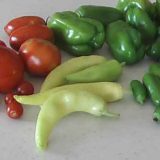
 My first harvesting of peppers and tomatoes. I’ve still got TONS of green tomatoes, waiting to ripen!
Peppers August

Last Week of July (Fall -10)

Today was the best gardening day of my life ever! As I posted earlier, my potato plants looked so sad. I was tearing out my peas (which finally stopped producing) and thought I would clear some space for fall crops. I ripped out 3 potato plants, and on the third–up came a potato. What? I thought they were totally dead and failing. Nope!

Potatoes July 2008

Here are a few 4″ potaotes–HUGE!

Potatoes July 2008 Ruler

In all, it was 10 pounds of potatoes. This is from 3 square feet and I pulled them up prematurely. I still have 2 feet I hadn’t rashly ripped out, so I’ll wait to see what I get in the fall.

When do I plant and harvest broccoli?


Broccoli

When do I plant and harvest broccoli?

What kind of fertilizer should I use on my broccoli?

Common broccoli problems

Growing Broccoli reference sheet from the Utah Extension Service

Peppers


Tomatoes


What kind of fertilizer should I use on my peas?

Some say none. If you are going to fertilize, use something low in nitrogen. I used a “blooming and rooting” fertlizer (9-59-8) before I saw any flowers, and within days I had tons of blooms, and soon I had peas.