Category Archives: Grow
Talk About Hardy
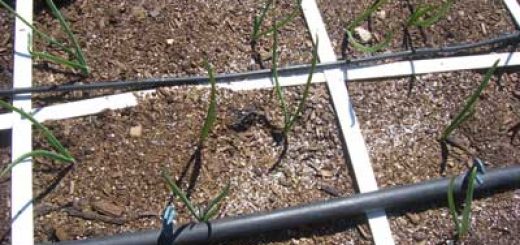
So check this out folks–I took this picture a week ago. I planted these onions last spring. The onions on top were planted from seed, and the ones on the bottom were green onions I bought at the store. I cut off the roots, leaving about 1″ of stem, and used the rest to cook with. Then I replanted the bottoms and they grew more onions. These onions were growing fine last fall, and then came the COLDEST WINTER EVER. We usually get lots of snow, but then the sun shines, temps rise to above freezing, and everything melts. Not … Continue reading
Talk About Leggy
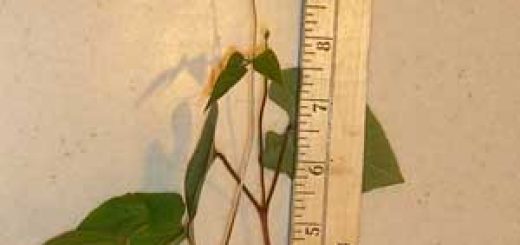
My son came home from school with a cup of dirt and a bean seed. We watered it, and I put it in the window. Here’s how it turned out: 2 1/4 inches to seed leaves 3 1/4 inches to first true leaves 8 1/2 inches to second leaves 7 inches to third leaves This is what we call “leggy”–tall and skinny, the poor plant is reaching to get enough light. Many people ask or wonder if a sunny window sill provides enough light to start seeds indoors. If your intention is simply to germinate seeds indoors, and plant them outside … Continue reading
The Great Bokashi Composting Experiment Part 2
Back in February I started using a new method to “compost” my kitchen waste called Bokashi Composting. I filled my bucket with scraps and Bokashi mix, which took about 2 weeks. Then I let it sit for at least two weeks. This is how it looked on March 8: I took it out to my garden, and dug a big trench. Because I am expecting it to take some time to decompose to the point that it is safe for plants, I chose a bed that I know I’m not going to use in right away. I poured it in–it does … Continue reading
The Great Bokashi Composting Experiment
Several weeks ago, Kati posted her garden plan and introduced us to Bokashi composting. I was so intrigued that I researched it right away, and decided to give it a try. My History With Composting You may notice I’ve never written about composting before. Don’t be fooled–I have tried to compost! But I keep waiting to find the method that works well before I write about it. I’ve bought two different composting bins, but have not had much success. My yard (1/5 acre) is too big–it produces more grass than the bins can hold. And yet it is not big … Continue reading
Protecting Your Garden with Fences
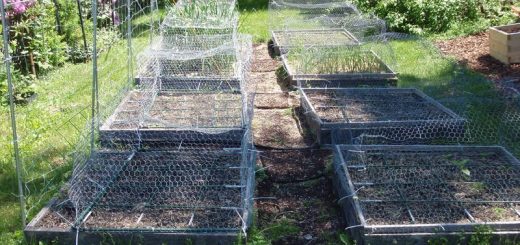
One question that often comes up is “How do I protect my garden from . . . ?” I live in a suburban neighborhood with a fully fenced yard and relatively few trees around us. The benefit is, I don’t fight many pesky critters. The biggest threat to my garden are my two boys who want to “help” or just dig in the dirt. But I did a little research and found some examples of how you might protect your square foot garden. Fully Fenced Enclosures This basically consists of building a “top” for your garden bed made of chicken … Continue reading
Fertilizing Onions
When onions grow to 6″ and again at 12″ tall, it is time to fertilize them. Avoid fertilizing within a month of harvesting. Here’s a picture of my onions at 6″ tall Application Rates Traditional gardens Apply 1/2 pound (or 1 1/4 cups) of 21-0-0 (Ammonium Sulfate) to 100 square feet Square Foot gardens Apply 1/2 cup of 21-0-0 (Ammonium Sulfate) to 12 squares My onions after applying 21-0-0 fertilizer Organic Alternatives Apply blood meal or soybean meal. Happy gardening!
The Longest Winter Ever–Delayed Planting
I apologize for not posting for so long. In the past two months my family has had almost every type of sickness: fevers, aches, coughing, bronchitis, ear infections, eye infections, skin infections, upset stomach, teething . . . On top of that, I have decided this is officially the LONGEST WINTER EVER! Here in Utah temperatures are averaging 20 degrees lower than normal, and we keep getting snow, sleet, and rain. I really wanted to start my tomatoes early with Walls-Of-Water, but I simply can’t believe they can survive these weather conditions! The good news is, I have planted my peas, … Continue reading
Soil Testing
NOTE: If you follow the square foot gardening method and use Mel’s Mix, I generally do not recommend testing your soil. It should be fine, and with a little added fertilizer you should have a plentiful harvest. However, if your soil contains “dirt” or if you have had problems in the past and are looking for a solution, testing your soil could be a great benefit. I wrote this article in response to many such questions/problems–I decided to come up with some easy solutions, starting with soil testing. If you want a professional, thorough soil test done, find your local … Continue reading
Fertilizer for Vegetable Gardens
When roaming down the aisle of gardening products, are you slightly baffled by the three number code that appears on the labels of the fertilizer? Wonder no more! There are three main nutrients that plants need to grow and thrive: Nitrogen, Phosphorus, and Potassium (think back to high school chemistry and remember that “K” is the symbol for potassium). All commercially packaged fertilizers have a set of numbers that correspond with these elements–those numbers indicate the percentage of that nutrient. 10-10-10 contains 10% nitrogen, 10% phosphorus, and 10% potassium 16-16-8 contains 16% nitrogen, 16% phosphorus, and 8% potassium 21-0-0 contains … Continue reading
Pruning Zucchini
Carol, one of my readers, brought this trick to my attention. Usually zucchini plants require a lot of space–in a square foot garden, it takes 9 squares. I tried giving it less space and growing it on a trellis, but that didn’t really work. By pruning and staking zucchini, you can grow them in significantly less space, with no loss of productivity. Here’s how it works. Plant a 4′ stake in the ground right next to your zucchini. It’s best to do this at the time you plant the seeds, so you don’t risk damaging the roots. As the zucchini … Continue reading